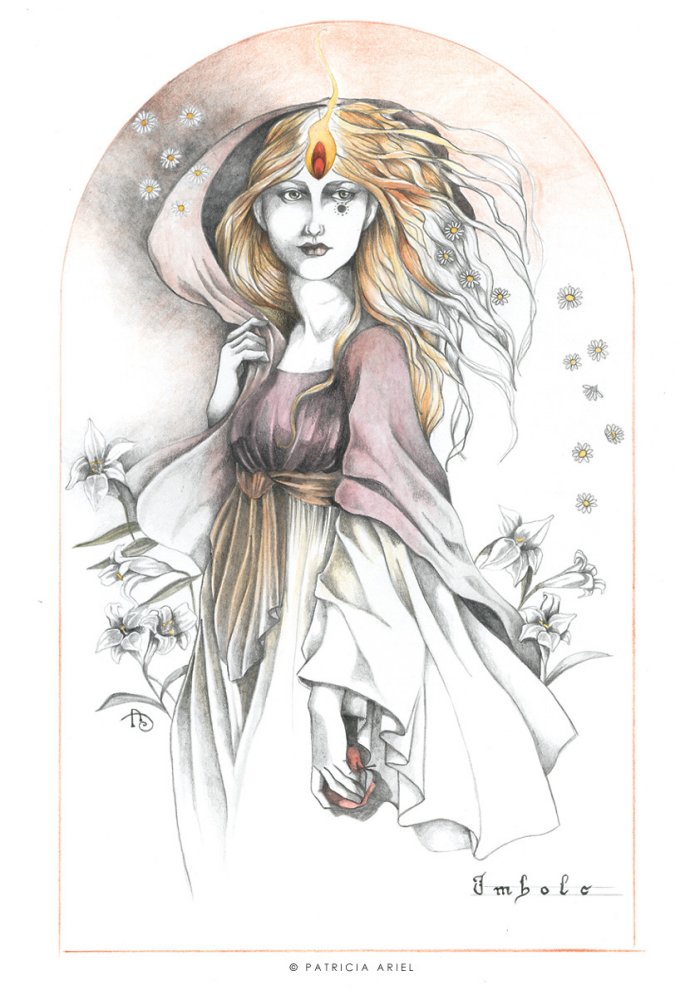
As the Wheel of the Year rolls through the Winter months we reach the first major milestone on 2011 – Imbolc. This festival is the first of the year’s Nature worship moments – a time to appreciate the beginnings of new life in the land. So, what are the origins and purposes of this festival?

A good explanation of Imbolc comes from the Chalice Centre website:
“The First of February belongs to Brigid, (Brighid, Brigit, Bride) the Celtic goddess who in later times became revered as a Christian saint. Originally, her festival on February 1 was known as Imbolc or Oimelc, two names which refer to the lactation of the ewes, the flow of milk that heralds the return of the life-giving forces of spring. Later, the Catholic Church replaced this festival with Candlemas Day on February 2, which is dedicated to the Virgin Mary and features candlelight processions. The powerful figure of Brigid the Light-Bringer overlights both pagan and Christian celebrations.
In most parts of the British Isles, February is a harsh and bitter month. In old Scotland, the month fell in the middle of the period known as Faoilleach, the Wolf-month; it was also known as a’ marbh mhiòs, the Dead-month. But although this season was so cold and drear, small but sturdy signs of new life began to appear: Lambs were born and soft rain brought new grass. Ravens begin to build their nests and larks were said to sing with a clearer voice.
In Ireland, the land was prepared to receive the new seed with spade and plough; calves were born, and fishermen looked eagerly for the end of winter storms and rough seas to launch their boats again. In Scotland, the Old Woman of winter, the Cailleach, is reborn as Bride, Young Maiden of Spring, fragile yet growing stronger each day as the sun rekindles its fire, turning scarcity into abundance.” (source: ChaliceCentre.net)
 Last year Kal and I went to Anglesey to follow the trail of Brigid along the River Braint. It was the first time that I full realised my relationship with birds of prey, particularly hawks. They were everywhere I went that day, culminating in them circling directly overhead when were ourselves going round in circles in the village of Brynsiencyn. It was a magickal experience which I will never forget.
This year Brigid has become transformed into Cailleach the crone aspect of the triple goddess. Now we are dealing with the other end of the spectrum of life and death. Whereas Bridget was the maiden aspect, Cailleach is the old lady. Therefore, I expect that the tone of this year’s pilgrimage will be different to last year’s. So, how did we know it was Cailleach and not Bridget this year? Well, she began to present herself to us – first at Ireland where she introduced herself to Kal, and then to me as a book-buying opportunity (the perfect way to introduce yourself to me).
How will this affect the way we approach the Imbolc day? In several ways. Firstly I would expect there to be a theme of life, death and regeneration involved somewhere on our long day’s journey to Lindisfarne. Here’s a section, again from the Chalice Centre site, explaining how Bridget came to symbolise being between the worlds of life and death:-
“Saint Brigid was said to be the daughter of a druid who had a vision that she was to be named after a great goddess. She was born at sunrise while her mother was walking over a threshold, and so “was neither within nor without.” This is the state known as liminality, from the Latin, limen: a threshold – the state of being “in between” places and times. In Celtic tradition this is a sacred time when the doors between the worlds are open and magical events can occur. ” (source: ChaliceCentre.net)
As a fire celebration Imbolc has become associated with anything symbolising fire, particularly candles. I will be taking some candles with me to light on Holy Island, and we will see where the dowsing rods direct me to place them, or where a sensation of it being ‘right’ comes over me. I will also be eating dairy products and maybe dedicating a few drops of milk or crumbs of cheese depending upon where I get to each my cheese sandwiches!
One of the things I need to do at Lindisfarne is to discover what the transition means for me. What tasks and duties will I be expected to perform in order to make progress on my spiritual path? Usually, I am led to a specific place to discover these answers, and then need to meditate to connect to the spirit of the time of year – in this case Cailleach or Brigid. Of course, I will report on what happens shortly after our visit on 29th January.
Gwas.
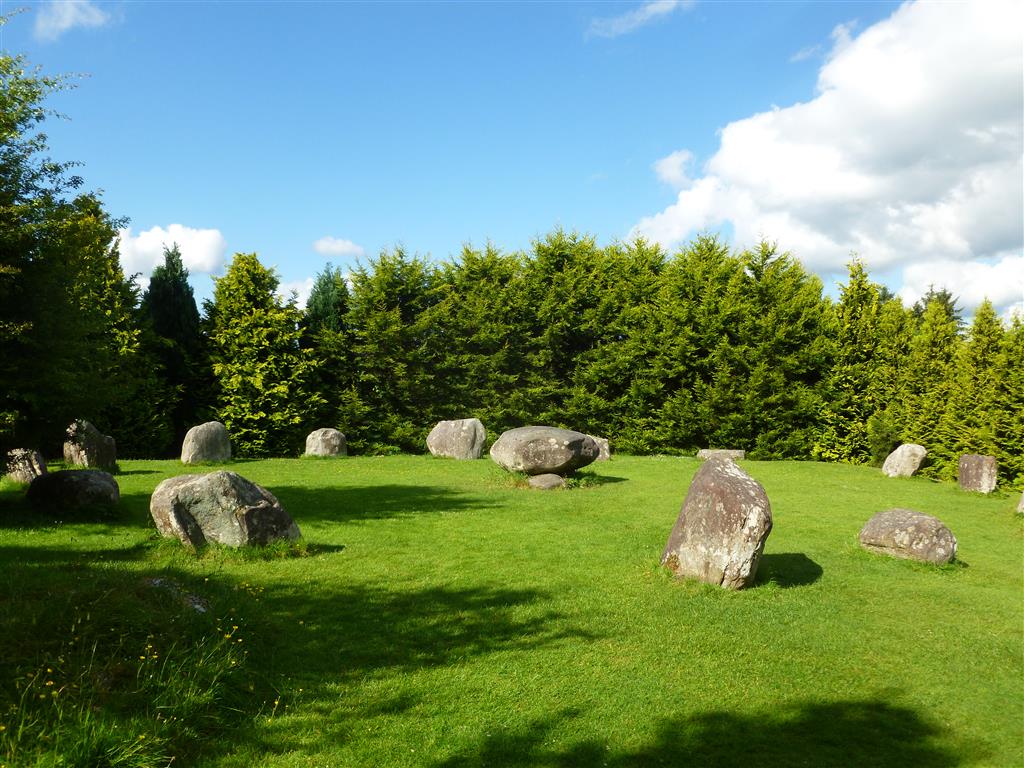


Imbolc is one of the most important moments in the year for me. Being a celebration of the returning light, as if the Spring was somewhere in there, yet an introvert, not manifesting herself or just not yet powerful enough.
On the other hand, with Brighid being the goddess of bards as a deity related to poetry, I feel connected to her the most – especially at this time of year. She is, in her three aspects, very difficult to grasp and understand – being the patron of war and song at the same time. She is dangerous, powerful and cunning, yet also generous to those, who learn to understand her diversity. She is, to me , the source of light of Awen itself.
I am looking forward to your report, Gwas 🙂
Every year I try to understand her changing aspects a little better. Even though I report some of her “characteristics” on the blog, derived from other sites, this is mostly for other people who read this post so that they might see something of her in themselves.
For me she only has those qualities that I have discovered for myself. For me she cannot be an aspect of war because I have never been to war and so would never meet this aspect of her. Does that make sense?
I do sympathise with the idea that she is inspirational from a bardic point of view. Even though she has not yet reclaimed her position this year I already feel a poem coming on soon in praise of her. Let’s get scribbling!
Hehe, yes, I am as well – scribbling constantly and producing music to, hopefully, finalize a praise ballad before Imbolc.
I understand that she cannot be an aspect of war to you – the relationship with Brighid is even more individual than any other god or goddess – she IS very special and dear to me. I too am only sharing my personal thoughts, not trying to convince anyone about anything.
This is an amazing time of year – and Imbolc is a great opportunity to get and give the best in it.
Looking forward to hearing your musical number, and I hope you’ll be posting something about your experiences over Imbolc on your own site?
I will definitely do so – for now the plans that I have are a little hazy, but I am definitely planning something special to celebrate.