The Gold Line
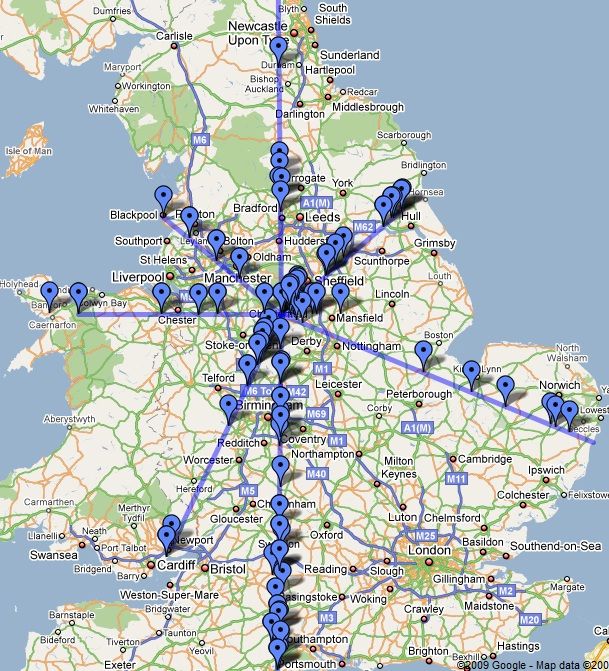
Length: 134 miles
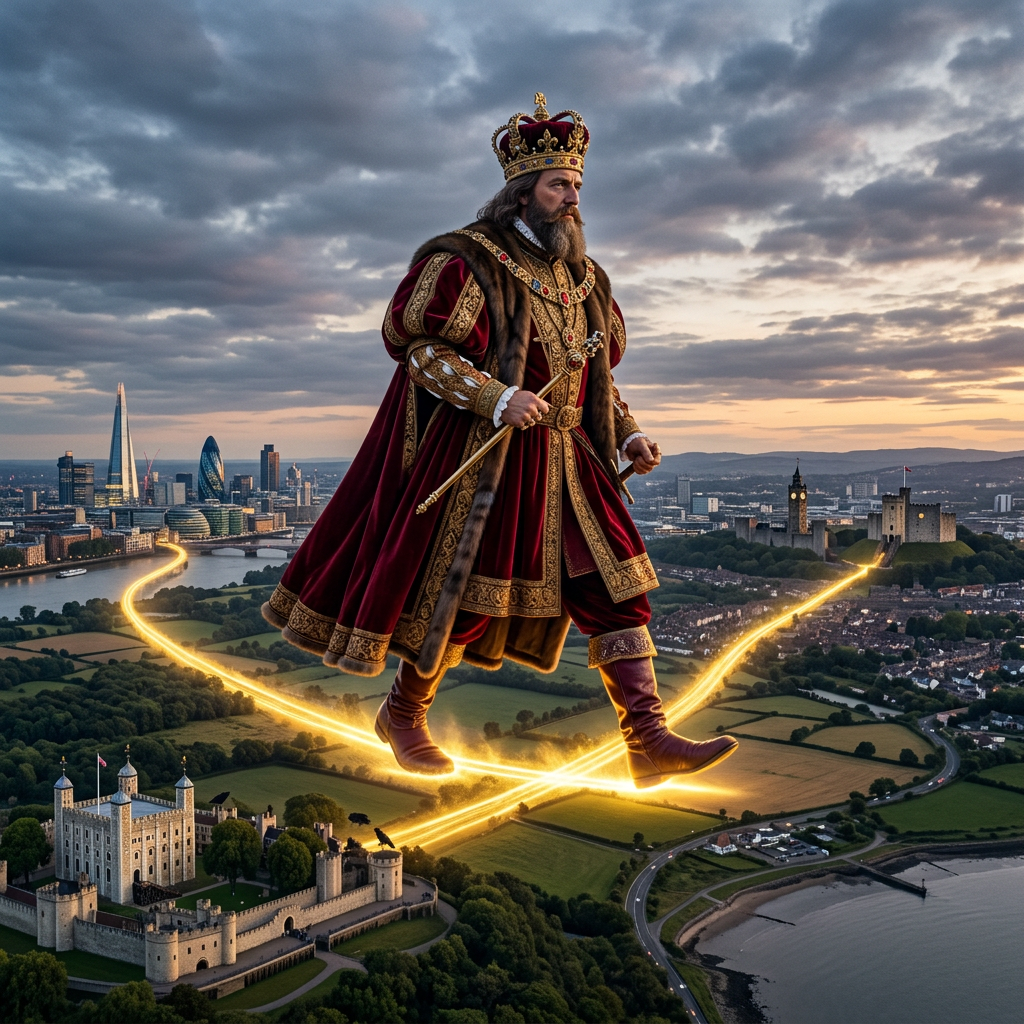
The start of the line (depending on which way you look at it) is The White Hill, the former name of the Tower of London as it is now more popularly known. Obviously, The Tower of London is strongly associated with the Royal Family of the United Kingdom. It is, after all, the display cabinet for The Crown Jewels, as millions of tourists have seen.
In a previous post about The White Line I have talked about the history of the White Hill and its associations with Bran the Blessed and King Arthur. I also talked about the colour associations of the Rose and White lines, and wondered whether that would continue into the final line, and I speculated that the colour may be black. However, there is not a single direct or even loose association with any colour along this line. So, the triangle doesn’t work out as a simple colour triad. Instead, the main association of the third line along this landscape shape is regal.
I debated a long time whether the name of this line should be “The King Line” or “The Gold Line”. There are many regal associations, but no colour associations at all uin the names of features and places. However, despite the lack of specific colour associations along the line the link between regality and the colour gold is a strong one. Therefore I have opted to keep the concept of colour as the defining characteristic of the name.
Gold has been closely tied to kings throughout history because its unearthly shine, rarity, and resistance to tarnish made it a natural symbol for divine power, wealth, and eternal rule. So many rulers over history have been either adorned or buried with gold artefacts that it is almost a given that the two are associated so strongly.

The Regal Connection
Along this line are a series of towns, suburbs and villages whose names include regal connections, most of them male associations, but then considering the history of kings and queens in these islands (in recent history) there have been many more male incumbents than female by far.
So, straight away, from its inception point, we have White Hill and its association with King Arthur. There is our first regal link. Then, as we travel away from London we see a large number of such associations :-
- Regal names (particularly “King”) in the name of villages, towns or places on or near the line
- Sites directly linked with the current royal family (houses, palaces, parks, etc)
- In the names of pubs
- A few ancient sites such as barrows, hillforts, The Ridgeway ancient track, and a white horse landscape feature
Also along this line are some places containing the word “ley”, but not as many as the White Line.
Let’s look at some of the sites along (or close to) the route which link with regality:-
- The White Hill – associated with King Arthur
- St James’ Palace
- Buckingham Palace
- Kensington Palace
- Windsor Castle
- Kington Langley
- Kington St Michael
- West Kington
- King Weston
So, there is a strong association with kingship here, which is why I considered calling the line “The King Line”, as this is the predominant feature set, although there are many others, as I will list below.
Let’s look at the “ley” associations on the line:-
- Berkeley Square
- Notting Hill Gate (a gateway for the ley line)
- Stockley Park
- Langley
- Streatley
- Kington Langley
- Leigh Delamere
- Westerleigh Cemetary
- Bromley Heath
- Avonmouth (long leys often terminate at river mouths)
Here are the ancient sites along that route:-
- Castle Royal, Known Hill
- Kidmore End Well
- Aldbourne Fifth Barrow
- The Ridgeway
- Liddington Hillfort
- Broad Town White Horse
- Lugbury Long Barrow
- Tormarton Barrow
- Dyrham House (ancient settlement)
- King Weston Hillfort

And finally, here are the hostelries which dot the line:-
- The Kings Arms, West Ealing
- The Rose & Crown, Ealing
- The Crown at Bray
- The Sun, Whitchurch Hill
- The Crown Inn, Broad Hinton
- The Rose & Crown, Pucklechurch
There is one other association which cannot be overlooked, and that is with all forms of transport. If you look along this line you will see links with:-
- Race tracks
- Places named “dray” – the old English word for “pulling” or “dragging”, as in horse carts
- Pubs with “wheelwright” links
- Other transport links – for example the port of Portbury, which is a massive storage area for new cars coming into and going out of the country
- The M4 is routed along or parallel to the line for much of its length
So, unlike the other lines in this triangle, this line has a real mixture of associations, but primarily the association is with the power of royalty. May I go as far as to say that they power of royalty is somewhat maintained by the flow of energy along this line?
That concludes my naming and listing of the lines in Robin Heath’s Lunation Triangle, but next I want to talk about the three lines together. Why do they exist? What power do they draw and where does it go? These things have yet to be investigated, but I will be doing just that soon.